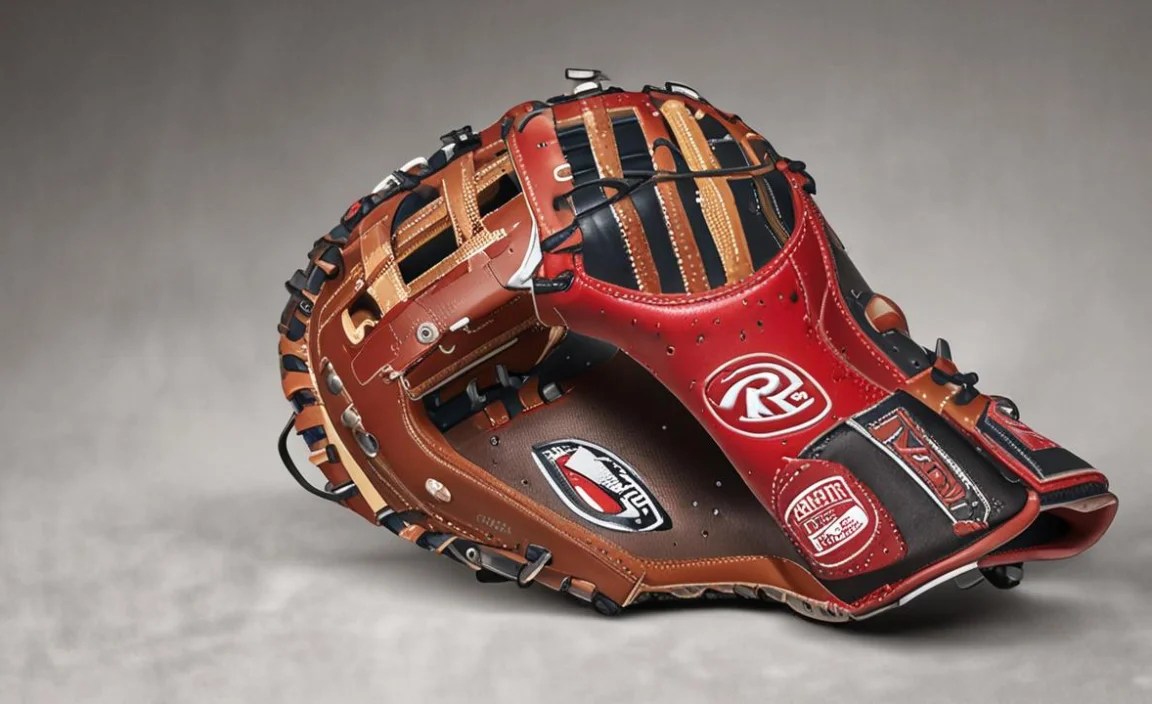
Rawlings catcher shin guards are top-rated essentials for protecting your lower legs, offering a blend of durability, comfort, and advanced design to keep you safe and focused on the game, no matter your skill level.
Shine Bright: Why Rawlings Catcher Shin Guards Are Your Best Bet

Catching is a tough job. You’re the general on the field, calling the shots and blocking everything that comes your way. But with all that action, your legs take a beating. Fastballs, foul tips, slides – they can all leave you sore or worse. That’s where good catcher shin guards come in, and when you think of reliable gear, Rawlings always pops up. Picking the right pair can feel a little overwhelming, but don’t worry! We’re going to break down what makes Rawlings shin guards stand out and help you find the perfect fit for your game.
The Core of Catcher Protection: What Makes Shin Guards Essential?
Think of catcher shin guards as your lower-leg armor. Their primary job is to absorb impact and prevent injuries. Without them, a simple foul tip could mean a bruised shin, a nasty cut, or even something more serious. They are designed to cover your shins, knees, and even your feet, providing a crucial barrier between your body and the hard-hit ball or the unforgiving baseball diamond.
For any catcher, especially those just starting or playing in youth leagues, proper protection is non-negotiable. It allows you to focus on making plays, framing pitches, and developing your skills, rather than worrying about getting hurt.
Why Rawlings? A Legacy of Trust and Innovation
Rawlings has been a heavyweight in the baseball world for over a century. They’ve built a reputation by consistently producing high-quality equipment that athletes trust, from gloves worn by Hall of Famers to the bats that drive runs. This legacy extends to their catcher’s gear, including shin guards.
Rawlings designs their shin guards with several key principles in mind:
Protection: Using advanced padding and durable materials to absorb shock effectively.
Comfort and Fit: Ensuring the guards stay in place and don’t hinder movement.
Durability: Building gear that can withstand the rigors of countless games and practices.
Innovation: Continuously improving designs based on player feedback and new technologies.
This commitment means when you choose Rawlings, you’re choosing gear backed by experience and a deep understanding of the game.
Decoding the Doughnut: Key Features of Top-Rated Rawlings Catcher Shin Guards

When you’re looking at the best Rawlings shin guards, you’ll notice a few recurring features. These are the elements that make them essential for any catcher.
Padding and Protection: The First Line of Defense
The most critical aspect of any shin guard is its padding. Rawlings shin guards typically feature a combination of materials designed to absorb impact:
High-Density Foam: This is the core of the padding, providing a soft yet firm layer to cushion blows.
Plastic Shells: Hard plastic outer shells are strategically placed over the shin and knee areas to deflect and distribute the force of impact. Think of these as a knight’s armor.
GEL Inserts: Some premium models might incorporate gel pads in key impact zones for enhanced shock absorption.
The way this padding is constructed and the coverage it provides are paramount. You want full coverage from just below the knee down to the end of your cleats, with no large gaps where a ball could sneak through.
Fit and Straps: Staying Put When it Matters Most
Shin guards that slide down or shift during play are not only annoying but can also compromise protection. Rawlings excels in this area with well-designed strap systems:
Adjustable Straps: Most models come with multiple adjustable straps (usually velcro or buckle) that allow you to customize the fit to your leg shape and size.
Secure Buckles: Durable buckles ensure that once you set the fit, they stay put through aggressive movements.
Ergonomic Design: The guards are molded to the natural shape of the leg, helping them feel more secure and less bulky.
A good fit means the guards feel like a second skin, allowing you to move freely without distraction while providing unwavering protection.
Breathability and Comfort: Staying Cool Under Pressure
Catching can be a hot job. Rawlings often incorporates features to help manage heat and moisture:
Ventilation Channels: Strategically placed vents in the plastic shells and padding help air circulate, reducing heat buildup.
Moisture-Wicking Liners: Interior fabrics are designed to pull sweat away from your skin, keeping you drier and more comfortable.
While shin guards are primarily about protection, comfort is key to performance. When you’re not distracted by sweat or discomfort, you can focus better on the game.
Durability and Materials: Built to Last
Baseball equipment takes abuse. Rawlings uses robust materials to ensure their shin guards can handle the constant impact and wear:
Tough Plastic: The outer shells are made from high-impact plastics that resist cracking and breaking.
Reinforced Stitching: Seams and strap attachments are reinforced to prevent tearing even under heavy use.
Resilient Padding: The foam and internal materials are chosen for their ability to bounce back after impact, maintaining their protective qualities over time.
You want shin guards that will last you for at least a full season, if not longer, and Rawlings gear is known for its longevity.
Top Rawlings Catcher Shin Guard Models: Your Essential Gear Guide

Rawlings offers a range of shin guards catering to different needs and budget levels. Here, we highlight some of the top-rated essentials that beginners and seasoned players alike can rely on.
The Workhorse: Rawlings RCM32 Series
The Rawlings RCM32 Series often stands out for its excellent balance of protection, comfort, and value. These are a fantastic option for youth players and those just getting into the catcher position.
Key Features:
Full Leg Coverage: Extends from knee to ankle, ensuring comprehensive protection.
Triple Knee Design: Offers enhanced padding and protection for the knee cap.
Durable Construction: Built with high-impact plastic and dense foam for longevity.
Adjustable Straps: Multiple velcro straps for a customizable and secure fit.
Breathable Design: Ventilation strategically placed to help keep players cool.
Pros:
Excellent value for the price.
Provides solid protection for everyday play.
Comfortable for long periods on the field.
Easy to adjust for a secure fit.
Cons:
May not offer the same level of advanced features as elite models.
Padding might be slightly less dense compared to highest-tier options.
The All-Around Performer: Rawlings Velo Series
The Rawlings Velo Series is designed for players who demand a bit more in terms of performance and advanced features. These guards often incorporate more specialized padding and a sleeker design.
Key Features:
Advanced Impact Protection: Utilizes updated padding systems for superior shock absorption.
Lightweight Design: A focus on reducing weight without sacrificing protection.
Improved Break Away Knee: Allows for more natural knee movement during squats and transitions.
Secure Strap System: Designed for a lock-down fit that minimizes shifting.
Moisture Management: Often includes enhanced breathable fabrics.
Pros:
Offers superior protection and comfort.
Lightweight feel enhances agility.
Premium materials and construction.
Ideal for serious players looking for an edge.
Cons:
Typically comes at a higher price point.
May be overkill for very young or recreational players.
The Elite Choice: Rawlings Pro Preferred Series Shin Guards
For the catcher who wants the absolute best, the Rawlings Pro Preferred series stands at the pinnacle. These are crafted with top-tier materials and cutting-edge technology, designed for professional and high-level amateur play.
Key Features:
Premium Padding: Uses the highest density foams and often incorporates specialized impact-absorbing technologies for maximum protection.
Anatomical Design: Engineered for a precise, glove-like fit that moves with the player.
Pro-Level Durability: Constructed with the most robust materials to withstand extreme use.
Enhanced Ventilation: Advanced airflow systems to keep the player as cool as possible.
Fully Adjustable and Secure System: Top-of-the-line straps and buckles for an unshakeable fit.
Pros:
Unrivaled protection and impact absorption.
Exceptional comfort and a perfect, secure fit.
Built to last through the toughest seasons.
Represents the peak of catcher gear technology.
Cons:
Significant investment; the most expensive option.
May feature more specialized designs best suited for experienced catchers.
Comparing the Essentials: A Quick Look
To help you make a decision, here’s a quick comparison table of general characteristics:
| Feature | Rawlings RCM32 Series | Rawlings Velo Series | Rawlings Pro Preferred Series |
| Target Player | Youth, Beginner, Intermediate | Intermediate, Advanced | Advanced, Professional |
| Protection Level | Good | Very Good | Excellent |
| Comfort | High | Very High | Top Tier |
| Durability | High | Very High | Elite |
| Weight | Standard | Lightweight | Lightweight |
| Price Point | Value/Mid-Range | Mid-to-High Range | Premium |
| Key Highlight | Great Value, Solid All-Around | Performance and Agility | Ultimate Protection/Comfort |
Sizing Up Your Shin Guards: How to Get the Perfect Fit
The best Rawlings catcher shin guards are useless if they don’t fit properly. A proper fit ensures maximum protection and comfort, allowing you to move without restriction. While exact sizing charts vary by model, here’s the general process:
1. Measure Your Leg Length: The most crucial measurement is from the center of your kneecap down to the top of your shoe (where your foot bends at the ankle). You can use a flexible tape measure for this.
2. Check the Manufacturer’s Sizing Chart: Rawlings provides specific sizing charts for each of their gear lines. Refer to these charts and match your leg measurement to the recommended size (e.g., Youth, Junior, Adult Small, Adult Medium, Adult Large).
3. Consider the Fit: When trying them on (if possible), ensure the knee pad sits comfortably over your kneecap. The shin guards should extend down to your footwear.
4. Adjust the Straps: The straps are your best friend for fine-tuning the fit.
The straps around the knee should be snug but not constricting.
The straps around the calf should secure the guard firmly without cutting off circulation.
The lowest strap should keep the guard from sliding down.
5. Test for Movement: Without the catcher’s mitt on, squat down, move your legs, and perform some quick stances. The shin guards should feel secure and not impede your natural movements.
Important Note on Youth Sizing: For younger players, it’s tempting to buy a larger size with the hope they’ll grow into it. However, ill-fitting shin guards can be a safety hazard. It’s better to get a size that offers proper coverage and protection now.
Beyond the Shin Guards: Completing Your Catcher’s Arsenal
While shin guards are critical, they are just one piece of the catcher’s protective equipment puzzle. To be fully prepared, you’ll also need:
Catcher’s Mitt: A specialized glove designed for receiving pitches. The larger pocket and reinforced webbing are key.
Catcher’s Helmet (Mask): Protects your face, head, and jaw. Modern designs often integrate a helmet and mask in one unit.
Chest Protector: Covers your torso, protecting your chest, ribs, and stomach from foul balls and body contact.
Throat Protector: A direct extension of the mask or a separate piece to guard the throat area.
Cup: Essential for protecting your groin area.
Ensuring all these pieces fit well together and are up to standard is vital for a catcher’s safety and confidence. Remember to check out resources like NCAA Baseball Rules for general safety guidelines.
Training Tips for Catchers: Sharpening Your Skills Safely

Great gear is only part of the equation. To become a top catcher, you need to combine your protective equipment with smart training. Here are some beginner-friendly tips:
Drills to Build Your Foundation
Stance and Balance: Practice maintaining a low, stable stance. Focus on keeping your weight balanced, ready to explode in any direction. Use drills that involve holding position for extended periods.
Receiving Drills: Work on your receiving skills by having a partner toss balls in different locations (high, low, inside, outside). Focus on soft hands and bringing the ball into the strike zone.
Blocking Drills: Essential for preventing passed balls. Practice dropping into a blocking position quickly. Start with stationary drills, then progress to blocking pitches thrown at moderate speeds. Focus on getting your body in front of the ball. A drill called “Bull in the Ring” can be helpful here, where you practice blocking pitches from various angles.
Throwing Drills: Develop your arm strength and accuracy. Focus on proper footwork and a quick release from your throwing hand after receiving a pitch.
Strength and Conditioning for Catchers
Catching requires a unique blend of strength, flexibility, and endurance.
Leg Strength: Squats, lunges, and calf raises are crucial for maintaining a low stance and absorbing impact.
Core Strength: A strong core is vital for stability, transferring power, and preventing injuries. Planks, Russian twists, and medicine ball exercises are great.
Flexibility: Work on hip flexor and hamstring flexibility, as well as shoulder and chest mobility, to prevent injury and improve range of motion. Yoga or dynamic stretching can be very beneficial.
Cardiovascular Endurance: Catching is demanding. Incorporate interval training and consistent cardio to maintain energy throughout a game.
Safety First: Always
Listen to Your Body: Don’t push through significant pain. If something hurts, rest and seek advice.
Proper Warm-up and Cool-down: Always prepare your body for activity and help it recover afterward.
Hydration: Stay well-hydrated, especially during practices and games.
Gear Maintenance: Regularly inspect your shin guards and other protective equipment for any signs of wear or damage. Cracked plastic or torn straps should be addressed immediately. For more on equipment safety standards, you can refer to guidelines on the USSSA (United States Specialty Sports Association) website regarding equipment safety.
Frequently