Rawlings Youth Catcher Gear: Essential Picks for Young Backstops! Keep your young catcher safe and comfortable with the right Rawlings gear. Learn about helmets, chest protectors, leg guards, mitts, and more. We’ll guide you through the best options to ensure protection, performance, and confidence on the field.
Playing catcher is one of the most important and demanding jobs on a baseball team. It requires a special blend of bravery, quick reflexes, and, most importantly, the right protective equipment. For young players stepping behind the plate, choosing the correct gear can feel overwhelming. But don’t worry! Getting your young backstop outfitted with top-notch Rawlings youth catcher gear is simpler than you might think. We’re here to break down exactly what you need and why it matters, so your young athlete can focus on snagging foul tips and calling the game with confidence.
Why Rawlings Youth Catcher Gear is a Home Run Choice

When it comes to protecting young athletes, quality and reliability are non-negotiable. Rawlings has a long-standing reputation in baseball, built on decades of innovation and a deep understanding of the game’s needs. For youth catcher gear, this translates to equipment designed specifically for the smaller frames and developing skills of younger players, without sacrificing the protection serious catchers demand. Choosing Rawlings means opting for gear that’s not only durable and effective but also engineered to help young players feel comfortable and confident.
This commitment to quality is crucial for several reasons. Firstly, proper gear significantly reduces the risk of injury. Young catchers are exposed to high-speed pitches and foul balls, and without adequate protection, even minor impacts can lead to sprains, bruises, or more serious injuries. Secondly, well-fitting and comfortable gear allows young players to move freely and perform at their best. If gear is too bulky, heavy, or ill-fitting, it can hinder their ability to block, frame pitches, and throw runners out. Finally, feeling properly protected builds confidence. When a young catcher knows they are secure, they can focus more on the game, improving their technique and enjoyment.
The Core Components of Youth Catcher Gear

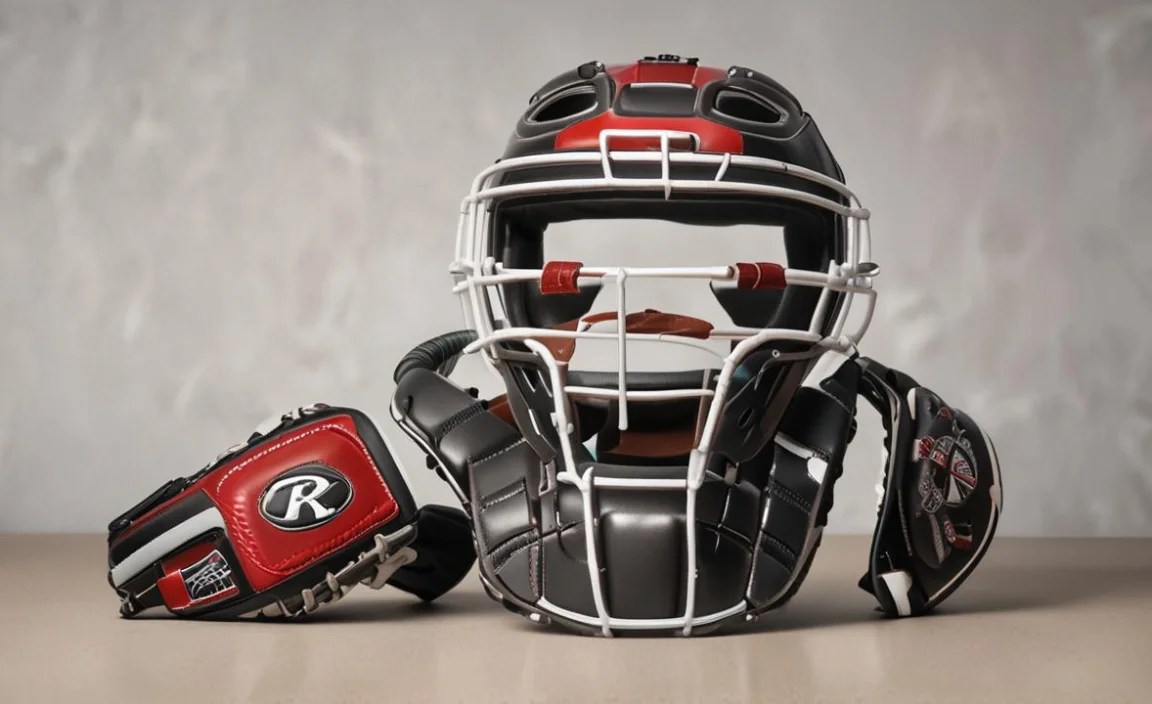
A complete catcher’s gear set is like a superhero’s armor, and each piece plays a vital role in keeping the young backstop safe and effective. Let’s break down the essential components that make up a youth catcher gear package, focusing on what makes Rawlings stand out.
1. The Catcher’s Helmet: Protecting the Noggin
The helmet is arguably the most critical piece of catcher’s equipment. It’s the first line of defense against errant pitches, foul tips, and accidental collisions. For youth players, the helmet needs to offer robust protection while also being lightweight and comfortable.
Rawlings offers several youth helmet models, often featuring:
- Reinforced Jaw Guard: This extension protects the lower face and jaw from direct impacts.
- Adjustable Fit System: Many models include chin straps and back adjustments to ensure a snug, secure fit, which is crucial for proper protection.
- Moisture-Wicking Liner: Keeping cool and dry is important for focus, and these liners help manage sweat.
- Ventilation Ports: Good airflow helps prevent overheating during long games or practices.
When looking at Rawlings youth helmets, prioritize models that meet safety standards, like those set by SEI (Safety Equipment Institute), and offer a good range of adjustability. A helmet that fits well is a helmet that protects best.
2. The Chest Protector: Shielding the Torso
The chest protector guards the chest, shoulders, and abdomen from the sting of blocked pitches and foul balls. For youth players, the ideal chest protector balances protection with mobility.
Key features to look for in Rawlings chest protectors include:
- Multi-Layered Padding: High-density foam and strategically placed plates absorb impact effectively.
- Adjustable Straps: These allow for a customizable fit, ensuring the protector stays in place and covers the vital areas.
- Ergonomic Design: Shaped to allow freedom of movement for throwing and blocking.
- Breathability: While protection is paramount, good ventilation helps keep young players comfortable.
Look for models specifically designed for youth sizes. These will be lighter and contoured to a smaller frame, providing necessary coverage without being cumbersome. This ensures they can move fluidly when needing to block a pitch in the dirt or pivot to throw.
3. Leg Guards: The Foundation of Protection
Leg guards are essential for protecting the shins, knees, and ankles. These are the areas most frequently exposed to pitches that bounce or wild pitches that miss the glove and chest protector. Robust leg guards are key to preventing serious injury.
Rawlings youth leg guards typically offer:
- Durable Shells: Often made from high-impact plastic, these outer shells are designed to deflect and absorb ball impacts.
- Anatomical Design: Shaped to fit the natural contours of the leg, providing comprehensive coverage and comfort.
- Adjustable Straps: Securely fasten the guards to allow for quick, easy adjustments and a snug fit during play.
- Knee and Shin Padding: Sufficient padding prevents soreness and bruising from blocked pitches.
- Swinging Gate Design: Some advanced models allow the knee pad to swing outwards, offering extra protection when in a catching stance.
The goal is to find leg guards that offer maximum coverage, particularly around the knees and shins, without restricting the player’s ability to move, crouch, and throw. A secure fit is paramount to prevent them from shifting during play.
4. The Catcher’s Mitt: The Glove of Power
A catcher’s mitt is very different from a regular fielder’s glove. It’s larger, has more padding, and lacks individual finger stalls, creating a pocket designed to absorb the impact of high-speed pitches and make it easier to “catch” the ball.
When choosing a Rawlings youth catcher’s mitt, consider:
- Size: Youth mitts typically range from 30 to 34 inches. Smaller sizes are better for younger players as they require less force to close.
- Padding: Ample padding is crucial to pad the sting of fast pitches and protect the young catcher’s hand.
- Pocket Depth: A deeper pocket helps secure the ball when it lands, preventing dropped third strikes or passed balls.
- Material: High-quality leather will break in better and last longer, offering superior feel and durability.
- Break-in Period: All catcher’s mitts require a break-in period. Look for features that can help speed this process up if available.
Rawlings offers excellent options like the 32-inch Renegade or the 33-inch R9 series, which are popular among youth catchers. A well-broken-in mitt that feels like an extension of the hand is vital for success.
Choosing the Right Rawlings Catcher Gear Set

Many manufacturers, including Rawlings, offer catcher’s gear sets. These sets typically bundle a helmet, chest protector, and leg guards, providing a cohesive and often cost-effective way to get all the essential pieces.
Pros of Buying a Catcher’s Gear Set:
- Convenience: All pieces are selected to work together and fit a specific age/size range.
- Cost-Effectiveness: Sets are often cheaper than buying individual components.
- Cohesion: Ensures a consistent level of protection and style across the gear.
Cons of Buying a Catcher’s Gear Set:
- Less Customization: You may not have as much choice if you prefer specific features from different models.
- Fit Nuances: While designed to fit, individual body types might require adjustments or a different combination of pieces.
When looking at Rawlings youth catcher’s gear sets, you’ll often find options like the Mach Series or the Renegade Series. These are designed with young players in mind, balancing protection, comfort, and value. A common set might include a helmet, chest protector, and leg guards suitable for ages 7-12, for instance. Always check the recommended age and size range to ensure a proper fit for your young player.
It’s also worth noting that the catcher’s mitt is usually purchased separately. This allows for more personal preference and ensures the best possible fit and feel for the player’s hand.
Sizing Guide: Getting the Perfect Fit
This is where many parents and young players get hung up. But with a few measurements and a little know-how, you can ensure your gear fits properly, maximizing protection and comfort. A proper fit is not just about looking professional; it’s about safety. Ill-fitting gear can leave gaps for injury or restrict movement.
Here’s a general guide for measuring for Rawlings youth catcher gear:
Helmet Sizing:
Most youth helmets are sized by head circumference. Use a flexible measuring tape:
- Measure around the widest part of the head, about an inch above the eyebrows and ears.
- Consult the specific Rawlings helmet size chart, usually found on their website or product packaging.
Chest Protector Sizing:
Chest protectors are typically measured by the length from the collarbone to the waist, or by chest circumference. Some common youth sizes are based on age ranges:
- Collarbone to Waist: Have the player stand straight and measure from the dip at the base of the neck (suprasternal notch) down to where the waist of their pants sits.
- Age/Size Chart: Rawlings will have charts that correlate these measurements or general age ranges (e.g., 7-9, 10-12) to specific chest protector models.
Leg Guard Sizing:
Leg guards are measured by the length from the knee to the ankle, or from the shin to the ankle, depending on the model. A crucial measurement is also from the knee down to the top of the foot.
- Knee to Ankle: Have the player sit with their leg bent at a 90-degree angle. Measure from the center of the kneecap down to the top of the shoe (where the laces would be).
- Knee to Top of Foot: Another key measurement is from the center of the kneecap to the top of their foot (where the shoe would end).
- Size Charts: Again, refer to Rawlings’ specific sizing charts for leg guards, as these measurements will help determine which model and size is best. Ensure the knee pad covers the entire knee joint and the shin guard extends down to protect the top of the foot.
Catcher’s Mitt Sizing:
Catcher’s mitts are measured by circumference. The most common youth sizes are 30, 31, 32, and 33 inches.
- Measure the Hand: Measure from the tip of the index finger around the palm to the heel of the hand.
- General Guideline: Generally, younger T-ball and youth players start with 30-inch mitts, moving up to 32-33 inches as they get older and face faster pitching.
- Feel is Key: While measuring is helpful, trying on mitts is ideal. The mitt should feel snug with minimal empty space in the pocket.
General Fit Tips:
- No Pinching or Rubbing: Gear should be snug but not uncomfortable.
- No Gaps: Ensure there are no exposed areas, especially around the throat, chest, and knees.
- Freedom of Movement: The player should still be able to crouch, move side-to-side, and throw with relative ease.
- Adjustability: Look for gear with plenty of adjustment options.
Breaking in Your Rawlings Catcher’s Mitt: A Crucial Step

A new catcher’s mitt, especially a Rawlings made of quality leather, is stiff. Think of it as a powerful tool that needs shaping. A proper break-in process makes the mitt more pliable, creates a defined pocket, and ultimately improves the catcher’s ability to secure pitches.
Here’s a breakdown of effective break-in methods:
- Play Catch: This is the most natural and effective method. Just the act of catching throws will begin to soften the leather and shape the pocket. Play catch as often as possible.
- Glove Mallet/Rubber Band: You can use a glove mallet to repeatedly “pound” the pocket area of the mitt. This helps break down the leather fibers. After pounding, you can secure the mitt in a closed position with strong rubber bands to help it retain its shape.
- Glove Oil/Conditioner: Apply a small amount of quality glove oil or conditioner to the pocket and the lacing. Work it in gently with your hands. Be careful not to oversaturate the leather, as this can weaken it. Follow the product instructions.
- The “Heavy Book” or “Weight” Method: After applying conditioner and shaping the pocket with your hand (place a baseball or softball firmly in the pocket), close the mitt around it. Place a heavy book or weight on top of the mitt overnight. This helps mold the pocket.
- Professional Help: Some sporting goods stores offer professional glove breaking-in services, which can be a good option if you’re short on time or unsure.
Important Considerations:
- Avoid the Oven/Microwave: Many people recommend using heat (oven or microwave) to speed up break-in. This is a BAD idea! Heat can dry out, crack, and permanently damage the leather, making it brittle and less protective.
- Patience is Key: A good break-in can take several days to a couple of weeks, depending on your methods and how much you practice.
- Consistency: Regularly working on the mitt, even for short periods, is more effective than infrequent long sessions.
A well-broken-in mitt feels like an extension of the hand, making it easier to control pitches and feel confident behind the plate.
Additional Protective Gear and Accessories
Beyond the core helmet, chest protector, leg guards, and mitt, there are a few other items that can enhance a young catcher’s safety, comfort, and performance.
1. Throat Protector
Many catcher’s helmets come with an integrated jaw guard, but some also have or can accommodate an additional, detachable throat protector. This is a crucial piece that extends protection down the throat and collarbone area, a vulnerable spot often missed by the primary helmet.
- Importance: A foul ball or errant pitch can cause serious injury to the throat.
- Attachment: These usually attach with Velcro or screws to the helmet.
- Rawlings Integration: Check if the Rawlings helmet you choose has a compatible throat protector.
2. Sliding Shorts/Pants
While not exclusive to catchers, the ability to slide into bases (if playing other infield positions) or take dropped third strikes requires padded protection. Sliding shorts or pants with built-in padding in the hips and thighs can significantly reduce bruising and scrapes.
3. Catcher’s Bag
A dedicated catcher’s bag is a must-have. These are larger and more robust than standard baseball bags, designed to hold bulky catcher’s gear.
- Features: Look for compartments that can hold a helmet, chest protector, leg guards, mitt, and other accessories, with sturdy zippers and reinforced bases.
- Ventilation: Some bags have ventilated compartments to help gear dry out and prevent odor buildup.
- Portability: Wheels and sturdy handles make transporting heavy gear much easier.
4. Water Bottle and Hydration
Catching is physically demanding. Staying hydrated is crucial for performance and preventing cramps. Ensure your young catcher always has a way to access water, whether it’s a personal water bottle or team coolers.
5. Protective Cup
This is a non-negotiable item for any male baseball player, especially catchers. A well-fitting athletic supporter with a protective cup guards against severe groin injuries from foul balls or collisions. Ensure it fits comfortably and securely within the player’s uniform pants.
Comparing Rawlings Youth Catcher Gear Lines
Rawlings offers different lines of catcher’s gear, each designed to meet varying needs and budgets for young players. Understanding these can help you make an informed decision.
Rawlings Mach Series
The Mach Series is often positioned as a more performance-oriented line. While still youth-focused, it can offer features that mimic professional gear, such as advanced padding systems and lighter-weight construction for improved mobility.
- Target Player: For the young catcher looking for excellent protection and a professional feel.
- Key Features: Often includes advanced padding technologies, aerodynamic designs, and premium materials.
- Price Point: Generally a mid-to-high range option.
