Getting the right Under Armour catcher’s gear size ensures comfort, protection, and peak performance. This guide breaks down sizing for masks, chest protectors, and leg guards, helping you find the perfect fit for optimal play and safety.
Under Armour Catchers Sizing: Your Essential Fit Guide

Finding the right size for your catcher’s gear isn’t just about comfort; it’s about safety and performance. When you’re crouched behind home plate, every piece of equipment needs to feel like a second skin – supportive, protective, and never in the way. For catchers, especially those new to the position or upgrading their gear, Under Armour offers fantastic options. But how do you pick the right size without getting it wrong? It’s a common question, and thankfully, it’s a solvable one. This guide will walk you through everything you need to know to nail your Under Armour catcher’s gear sizing, from masks to shin guards, so you can focus on stealing strikes and calling the game.
Why Sizing Matters for Catcher’s Gear

As a catcher, you’re in a unique position on the field. You’re constantly moving, blocking pitches, and taking impact. The right fit for your catcher’s gear is crucial for several reasons:
- Protection: Ill-fitting gear can shift, leaving gaps that could lead to injuries from foul tips or collisions. Properly sized gear stays in place, offering maximum impact absorption.
- Mobility: The best catcher’s gear enhances your defensive capabilities. If your gear is too big or too small, it can restrict your movement, making it harder to block, throw, or receive pitches cleanly.
- Comfort: You’ll be wearing this gear for hours. Uncomfortable gear can be a major distraction, impacting your focus and endurance.
- Durability: Gear that fits correctly experiences less stress and wear and tear, meaning it will last longer.
Under Armour is known for its athletic apparel and equipment, and their catcher’s gear is designed with these principles in mind. Let’s dive into how to find your perfect Under Armour fit.
Understanding Under Armour Catcher’s Gear Components

Under Armour’s catcher’s gear typically includes three main protective pieces:
- Catcher’s Mask/Helmet: Protects the head and face.
- Chest Protector: Shields the torso, including the chest, ribs, and abdomen.
- Leg Guards: Covers the shins, knees, and feet.
Each of these components has its own sizing considerations. We’ll cover them one by one.
Under Armour Catcher’s Mask Sizing

The catcher’s mask is arguably the most critical piece of equipment for safety. Ensuring it fits correctly is paramount. Under Armour masks are often designed to fit snugly while providing clear visibility.
How to Measure for Your Catcher’s Mask
The primary measurement for a catcher’s mask is the circumference of your head. However, the fit is also heavily influenced by the length from the chin to the crown of your head.
1. Measure Your Head Circumference:
- Take a flexible measuring tape.
- Wrap it around your head, about an inch above your eyebrows and ears.
- Keep the tape snug but not tight.
- Note the measurement in inches or centimeters.
2. Measure Chin-to-Crown Length:
- Find the middle of your chin.
- Run the tape measure straight up over the bridge of your nose and to the very top (crown) of your head.
- This measurement helps ensure the mask provides adequate facial coverage from top to bottom.
Under Armour Catcher’s Mask Sizing Chart (Example)
While specific model charts can vary, here’s a general idea of how Under Armour might size their masks based on common measurements. Always refer to the specific product page for the most accurate sizing information.
| Size | Head Circumference (Inches) | Chin-to-Crown (Inches) |
|---|---|---|
| Youth | 20.5 – 21.5 in | 9.5 – 10.5 in |
| Intermediate | 21.5 – 22.5 in | 10.5 – 11.5 in |
| Adult | 22.5 – 23.5 in | 11.5 – 12.5 in |
Important Considerations for Masks:
- Jaw Protection: Ensure the mask’s jaw guard extends adequately to protect your chin and jawline.
- Visibility: Check that your field of vision isn’t obstructed. You need to see the ball, the field, and call plays clearly.
- Padding: The interior padding should be comfortable and help absorb impact.
- Straps: Adjustable straps are key for a secure fit. Make sure they can be tightened properly without digging into your skin.
Under Armour Catchers Throat Guard Sizing
A vital attachment for many catcher’s helmets, the throat guard, also known as a throat protector, needs careful consideration regarding its length and how it interacts with your mask and chest protector. While not always a separate purchase, and often integrated into some helmets, specific aftermarket guards need proper sizing.
The goal of a throat guard is to protect the vulnerable area of your throat and upper chest from foul tips that might go under the mask. This means it must extend far enough down your chest but not be so long that it impedes your ability to turn your head or gets caught on your chest protector.
How to Measure for a Throat Guard:
- Start with your mask on and in the playing position.
- Measure from the bottom edge of your mask, where it sits on your chin, straight down towards your sternum (breastbone).
- Measure where the protector would need to end to provide good coverage without being excessive.
- Compare this measurement to the throat guard’s listed length. Many guards are adjustable, but knowing your ideal length range is helpful.
Under Armour Catchers Throat Guard Sizing Guide Recommendations:
- Youth players (<12 years old): Typically need shorter guards, often around 5-6 inches in length.
- Intermediate/High School players (12-17 years old): May need guards in the 6-8 inch range.
- Adult players: Often utilize guards that are 7-9 inches or longer, depending on torso length and the specific helmet/chest protector combination.
It’s crucial that the throat guard does not interfere with your ability to move your head freely. Additionally, ensure it sits properly against your chest protector to prevent a gap.
Under Armour Chest Protector Sizing
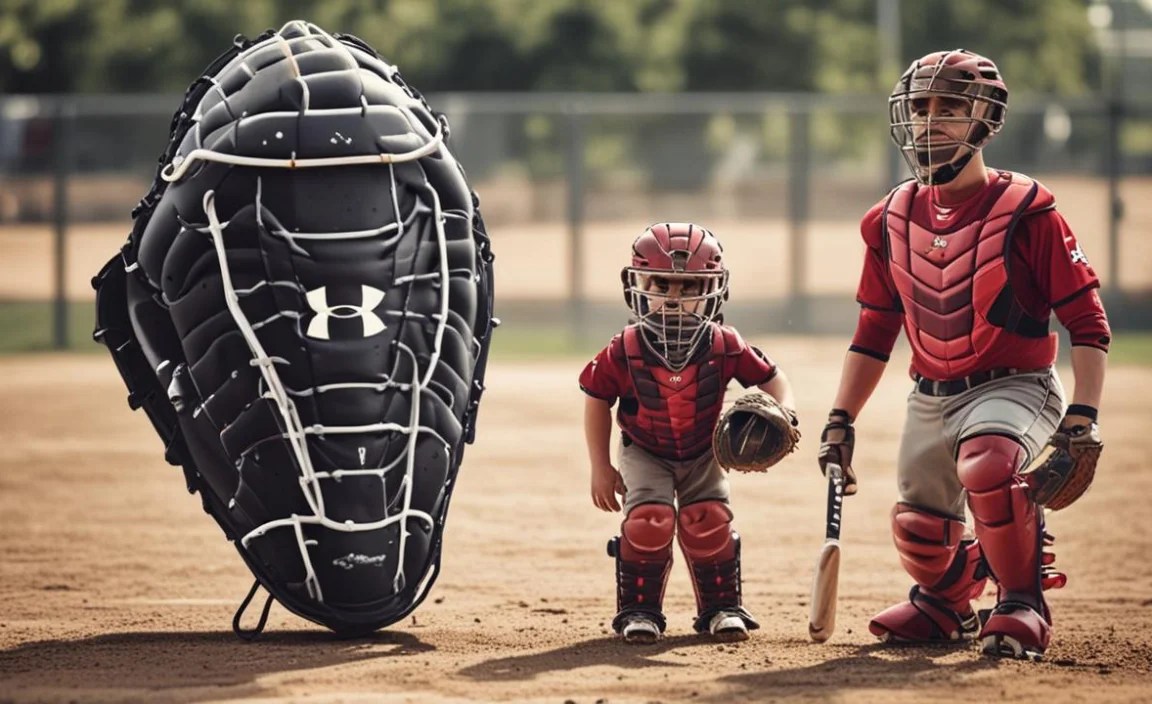
The chest protector is designed to absorb impact to your torso. A good fit means it covers your rib cage and sternum effectively without being too bulky.
How to Measure for Your Chest Protector
Chest protector sizing is typically based on the length from the top of your shoulder (near the collarbone) down to your waist or belt line.
1. Measure Your Torso Length:
- Stand up straight.
- Place one end of the measuring tape at your collarbone, on the shoulder.
- Run the tape measure down the front of your body, over the sternum, to your waistline (where a belt would typically sit).
- Note the measurement in inches.
Under Armour Chest Protector Sizing Chart (Example)
Chest protectors often come in youth, intermediate, and adult sizes, with the length being the primary differentiator. Some models may also include adjustable straps for a more customized fit.
| Size | Torso Length (Inches) | Ideal Age Range |
|---|---|---|
| Youth | 12 – 14 in | 8 – 12 years |
| Intermediate | 14 – 16 in | 12 – 16 years |
| Adult | 16 – 18 in | 16+ years |
Important Considerations for Chest Protectors:
- Coverage: The protector should cover your sternum and extend down to protect your abdomen without restricting your ability to squat.
- Shoulder Padding: Adjustable shoulder straps are common and allow you to customize the fit and ensure the pads stay in place.
- Side Coverage: Look for good side coverage over the ribs.
- Flexibility: While protective, the material should still allow for a good range of motion.
Under Armour Leg Guard Sizing
Leg guards are long, often three-piece components that protect your shins, knees, and part of your feet. The goal is maximum protection with minimal interference.
How to Measure for Your Leg Guards
Leg guard sizing is primarily determined by the length of your shin and the length of your leg from the knee to the ankle. Under Armour often uses a combination measurement.
1. Measure Shin Length:
- Sit on a chair with your knee bent at a 90-degree angle.
- Measure from the kneecap straight down to the top of your shoe (where the laces are).
- Note the measurement in inches.
2. Measure Knee to Ankle Length:
- With your leg still bent, measure from the center of your kneecap down to the top of your foot.
- This measurement helps ensure the shin guard covers your entire shin without being too long and cumbersome.
3. Measure the “Wing” or Thigh Protection:
- Some leg guards have extended padding on the sides (wings) for additional thigh protection, or a separate thigh guard. Measure from your kneecap up to where you want thigh protection to begin.
Under Armour Leg Guard Sizing Chart (Example)
Leg guard sizes usually correspond to the measurement taken from the kneecap down to the ankle/top of the foot.
| Size | Length (Knee to Ankle/Top of Foot) (Inches) | Typical Chest Protector Pairing |
|---|---|---|
| Youth | 12 – 14 in | Youth Chest Protector |
| Intermediate | 14 – 15.5 in | Intermediate Chest Protector |
| Adult | 15.5 – 17 in | Adult Chest Protector |
Important Considerations for Leg Guards:
- Knee Protection: The knee cap should be centered over your kneecap.
- Shin Coverage: The guard should extend down to cover most of your shin and ideally overlap with your shoe or a toe piece.
- Ankle Protection: Ensure adequate ankle coverage without restricting movement.
- Straps: Under Armour leg guards typically feature sturdy elastic straps with Velcro closures to keep them securely in place. Make sure they cinch down effectively.
- Weight and Swing: Lighter guards can help maintain agility. If they feel too heavy or bulky, they might slow you down.
Tips for Trying On and Adjusting Gear
While measurements are a great starting point, nothing beats trying the gear on. Here are some tips:
- Wear Your Uniform: If possible, try on gear while wearing the uniform you’ll be playing in. This gives you a realistic feel for how it will fit during a game.
- Simulate Game Movements: Get into a catcher’s stance. Block. Practice throwing. See if the gear shifts, binds, or hinders your motion.
- Check for Gaps: In a mirror, check for any potential openings where a ball could sneak through. Pay attention to areas around the neck, sides, and limbs.
- Adjust Straps Properly: Don’t overtighten. Straps should be snug and secure, but not so tight they cut off circulation or cause discomfort.
- Listen to Your Body: If something feels off, painful, or just plain wrong, it probably is.
For detailed breakdowns on equipment care and maintenance, check out resources like those from the MLB Develops program, which often highlights best practices for athlete conditioning and equipment management.
Frequently Asked Questions about Under Armour Catcher’s Gear Sizing
Q1: What is the most important part of catcher’s gear to size correctly?
A1: While all pieces need to fit well, the catcher’s mask is the most critical for safety. An improperly sized mask can lead to serious head and facial injuries.
Q2: Can I use a general baseball helmet size for my catcher’s mask?
A2: No, catcher’s masks are designed differently from batting helmets. Catcher’s masks offer more extensive facial protection and have different sizing specifications. Always use a sizing guide specifically for catcher’s masks.
Q3: How often should I replace my catcher’s gear?
A3: Catcher’s gear doesn’t have a strict replacement schedule, but it should be replaced if it shows signs of significant wear and tear, cracks, broken straps, or if it no longer fits properly. Inspect your gear regularly.
Q4: My Under Armour leg guards feel loose even with the straps tightened. What should I do?
A4: Ensure the straps are hooked correctly and pulled taut. If they still feel loose, your leg guards might be too large, or you might have a very slender leg build. Some players use additional athletic tape or custom modifications, but it’s often better to exchange for a smaller size if possible.
Q5: Do Under Armour chest protectors come with adjustable straps?
A5: Most Under Armour chest protectors, especially those in adult and intermediate sizes, come with adjustable shoulder and waist straps. This allows for a more personalized and secure fit.
Q6: What’s the difference between youth, intermediate, and adult sizing for Under Armour catcher’s gear?
A6: The primary difference is the overall size and length of the gear. Youth gear is smaller for younger, smaller players. Intermediate is a transition size, and adult sizes are for older teens and adults, generally larger and longer to accommodate adult physiology. Always consult the specific size charts for each product.
Conclusion
Choosing the correct size for your Under Armour catcher’s gear is an investment in your performance and, most importantly, your safety. By understanding how to take accurate measurements for your mask, chest protector, and leg guards, and by paying attention to the specific sizing charts provided by Under Armour, you can confidently select equipment that offers optimal protection and freedom of movement. Remember to try on your gear whenever possible and make adjustments to ensure a snug, comfortable fit that lets you focus entirely on the game. With the right gear, you’ll be ready to command the plate with confidence and skill, knowing you’re well-protected!
