Getting the right size for your Wilson catcher’s throat guard is crucial for comfort and protection. This guide breaks down how to find the perfect fit, ensuring you can focus on the game with confidence.
Wilson Catchers Throat Guard Sizing: Essential Guide

Hey everyone, John P. Miller here from FriskMode! When you step behind the plate, your catcher’s gear is your best friend. And one piece of that gear that sometimes gets overlooked, but is super important, is the throat guard. It might seem like a small thing, but a properly sized throat guard is key for protecting that vulnerable area without getting in your way. If you’ve ever felt like your throat guard is too loose, too tight, or just plain awkward, you’re in the right place. We’re going to walk through exactly how to get the right fit for your Wilson catcher’s throat guard, so you can focus on blocking pitches and throwing strikes. Stick around, and we’ll make sure you’re protected and comfortable.
Why Throat Guard Fit Matters

Think about it – you’re crouched down, focused on the pitcher, and anticipating every move. The last thing you want is to be distracted by gear that doesn’t fit right. A throat guard that’s too big might flop around, potentially blocking your vision or even getting in the way of your mask. Too small, and it won’t offer the full protection you need. It’s like wearing a glove that’s way too loose or too tight – it just doesn’t feel right and can affect your game. A good fit means the guard sits snugly against your neck and under your mask, providing a solid line of defense without being a nuisance.
Understanding Throat Guard Components
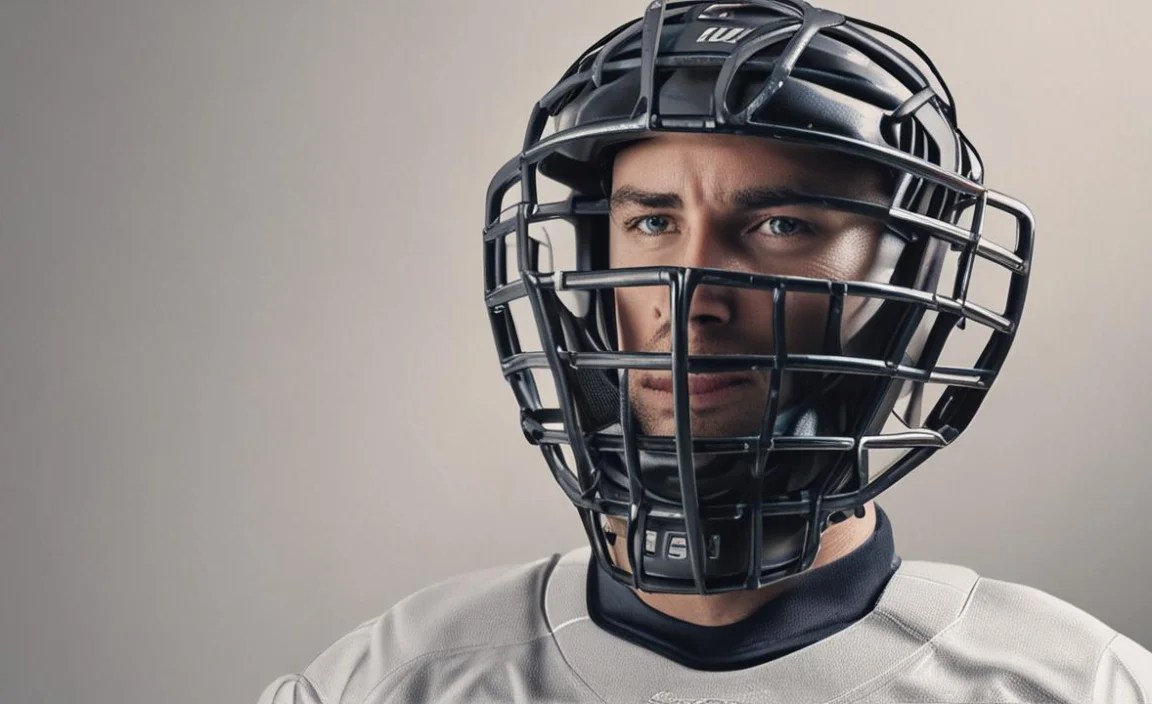
Before we dive into sizing, let’s quickly look at what makes up a catcher’s throat guard. Most throat guards, especially common Wilson models, are designed to attach to your catcher’s mask. They typically have a few key parts:
- The Guard Itself: This is the main piece that directly covers your throat. It’s usually made of sturdy plastic designed to absorb impact.
- Attachment Points: These are usually loops or clips that connect the guard to the wires of your catcher’s mask.
- Adjustable Straps (sometimes): Some models might have straps to fine-tune the fit once it’s attached to the mask.
Knowing these parts helps you understand where the measurements and adjustments come into play.
How to Measure for Your Wilson Throat Guard

The most common way catcher’s throat guards are “sized” is by their length, which is largely determined by the size of the catcher’s mask and the athlete’s neck length. While Wilson doesn’t always offer distinct “small, medium, large” throat guards like they do for helmets or chest protectors, the fit will relate to the mask size you’re using.
Step 1: Identify Your Catcher’s Mask Size
The vast majority of throat guards are designed to fit standard catcher’s masks. The key is knowing what size mask you have. Mask sizes are generally categorized by:
- Youth: Typically for younger players, ages 4-7 or 4-9 depending on the brand and model.
- Intermediate/Junior: For players in the 7-12 or 8-13 age range, offering a slightly larger fit than youth sizes.
- Adult/Senior: For players 13 and older, including high school, college, and adult leagues.
Check the labeling on your current catcher’s mask. It should indicate the size or age range it’s intended for. If you’re unsure, comparing it to a known size or checking the manufacturer’s specs for your specific mask model can help. For instance, Wilson’s own adult catcher’s masks are designed for a specific fit range.
Step 2: Consider Your Neck Length and Stature
While throat guards attach to masks, their length is designed to cover the throat effectively without being excessively long or short. A standard adult throat guard usually measures around 6-7 inches in length. Youth guards are typically shorter, around 4-5 inches. When you attach the guard, you want the bottom of the guard to comfortably sit below your Adam’s apple, extending down far enough to protect the crucial part of your throat. It shouldn’t be so long that it bumps into your chest protector when you’re in a crouch.
Step 3: Attaching and Testing the Fit
Once you have a throat guard (or are considering one), the best way to ensure fit is to attach it to your mask and try it on.
- Attach the Guard: Most throat guards have simple hooks or clips that slide onto the lower bars of your catcher’s mask. Ensure they are securely fastened.
- Put on Your Mask (and Helmet, if applicable): Wear your catcher’s mask, and if you use a batting helmet or a mask with an integrated helmet, wear that too.
- Get into a Catcher’s Stance: Crouch down as you would during a game.
- Check for Clearance: Look down. Does the throat guard obstruct your view of home plate or the pitcher? It shouldn’t.
- Check for Coverage: Feel where the guard sits. Does it comfortably cover your throat area? Is it too high or too low?
- Check for Comfort: Is it digging into your neck? Is it too loose and wobbly?
A good fit means the throat guard feels like an extension of your mask – it’s there for protection, but you don’t really “feel” it unless it’s doing its job.
Common Wilson Throat Guard Models and Their Fit

Wilson offers various catcher’s masks, and their throat guards are typically designed to complement these. While specific model numbers for throat guards can vary, they almost always follow a pattern related to mask size.
Here’s a general idea:
| Mask Size | Typical Throat Guard Length | Intended User |
|---|---|---|
| Youth | 4-5 inches | Young players (approx. ages 4-9) |
| Intermediate/Junior | 5-6 inches | Youth players (approx. ages 7-13) |
| Adult/Senior | 6-7.5 inches | High school, college, adult players (ages 13+) |
It’s important to remember that these are general guidelines. Always check the product descriptions on the retailer’s website or the Wilson official site for the most accurate dimensions. For example, searching for Wilson throat guards on Wilson’s site will show you current offerings, and their descriptions usually specify mask compatibility.
Tips for Ensuring Best Fit

Sometimes, even with the right general size, little tweaks can make a big difference. Here are some tips to guarantee your Wilson catcher’s throat guard is as secure and comfortable as possible:
- Check Mask Compatibility: Ensure the throat guard you choose is indeed designed for your specific model or series of Wilson catcher’s mask. Some masks have unique bar spacing or shapes that might affect how a universal guard fits.
- Secure Attachment: Make sure the clips or hooks are fully engaged. A loose attachment is a common cause of a wobbly throat guard.
- Stance is Key: Always test the fit in your actual playing stance. When you’re crouched, your head position and neck angle change. This is when you’ll discover if the guard is too long or too short.
- Consider Mask Angle: The angle at which your mask sits on your head can affect throat guard placement. Ensure your mask is adjusted properly for your head size, as this influences where the throat guard will end up.
- Look for “Universally Compatible” If Unsure: If you have an older or less common mask model, look for throat guards that are marketed as “universally compatible” or designed for a wide range of masks. These often have more flexible attachment mechanisms.
- Ask Your Coach or a Teammate: If you’re still unsure, have a coach or an experienced teammate check the fit. They can often spot issues you might miss.
What if My Throat Guard Isn’t the Perfect Fit?

Don’t worry if your throat guard isn’t absolutely perfect right out of the box. Most modern throat guards are designed with a bit of flexibility. If it’s slightly too long, it might work fine if it doesn’t interfere with your vision or movement.
However, if it’s noticeably too long, interferes with your mask or chest protector, or feels uncomfortable, you might need to consider a different size or model. Unfortunately, most throat guards are not designed to be cut or modified, so switching might be the best option for consistent comfort and protection across all your games and practices.
When to Consider a New Throat Guard
You should think about replacing your throat guard if:
- It’s cracked or damaged.
- It no longer fits securely to your mask.
- It’s too short and leaves a gap in protection.
- It’s too long and repeatedly interferes with your vision or mask.
- It causes significant discomfort or chafing.
Safety is the priority, and ill-fitting or damaged gear compromises that. Thankfully, Wilson throat guards are generally durable, and replacements are readily available. According to safety guidelines for athletic equipment, ensuring proper fit is paramount for preventing injuries. Organizations like the National Federation of State High School Associations (NFHS) provide extensive rules and recommendations for protective equipment, underscoring the importance of correct sizing and usage.
Maintaining Your Throat Guard
Even a perfectly sized throat guard needs a little care. Keeping it clean and checking for damage will ensure it lasts and continues to offer the best protection. After each game or practice, a quick wipe-down with a damp cloth will remove sweat and dirt. Look for any cracks or signs of wear, especially around the attachment points. Proper storage, like keeping it attached to your mask in your gear bag, also prevents it from getting bent or damaged.
FAQ: Wilson Catchers Throat Guard Sizing
Q1: How do I know if my Wilson throat guard is the right length?
A: A properly sized throat guard will extend from the bottom of your mask, covering your throat area comfortably without being too long (obstructing vision or hitting your chest protector) or too short (leaving unprotected gaps). Test it in your catcher’s stance. The bottom edge should fall below your Adam’s apple and above your sternum.
Q2: Do Wilson throat guards come in different sizes like small, medium, and large?
A: While dedicated throat guards don’t always have distinct S/M/L sizing like helmets or masks, they are designed to be compatible with specific mask sizes (Youth, Intermediate, Adult). The length of the guard itself is what primarily dictates the fit for different players and mask types.
Q3: Can I adjust my Wilson throat guard if it feels a bit loose?
A: Most throat guards attach via clips or hooks to the mask frame. If it feels loose, ensure the attachments are fully secure. Some newer models might have minor adjustment points, but significant adjustments aren’t typical. If loose, it might not be compatible with your mask or may be damaged and need replacement.
Q4: What’s the difference in throat guard size for a youth mask versus an adult mask?
A: Youth throat guards are generally shorter (around 4-5 inches) to match smaller youth masks and players. Adult throat guards are longer (around 6-7.5 inches) to accommodate adult masks and players’ neck length and stature, ensuring proper coverage.
Q5: My throat guard seems to hit my chest protector. Is that normal?
A: No, it’s not ideal. If your throat guard consistently hits your chest protector when you’re in your squat, it’s likely too long for your build or mask setup. This can be restrictive and uncomfortable. You might need a shorter throat guard or a mask that sits differently.
Q6: Where can I find the exact measurements for a specific Wilson throat guard model?
A: The best places to find exact measurements are the product description on the official Wilson website or reputable online sports equipment retailers. Look for dimensions, length specifications, or compatibility notes regarding mask sizes.
Conclusion
Finding the right fit for your Wilson catcher’s throat guard is all about ensuring it integrates seamlessly with your mask to provide maximum protection without hindering your performance. By understanding the relationship between mask size and guard length, and most importantly, by testing the fit in your actual stance, you can guarantee comfort and confidence behind the plate. Remember, while specific throat guards may not have S/M/L labels, their design is intended to work with the corresponding catcher’s mask sizes. A well-fitted throat guard is a simple but vital piece of your defensive arsenal. Keep it maintained and ensure it’s right for you, and you’ll be ready to block anything coming your way. Stay safe and keep playing hard!
